Alabama Power has become a central figure in the expansion of surveillance technology across the state, marketing and installing automated license plate readers (ALPRs) and other camera equipment for local governments. This initiative, ongoing since at least 2019, has positioned the power company as Flock Safety's “longest-standing reseller,” as confirmed by Flock itself.
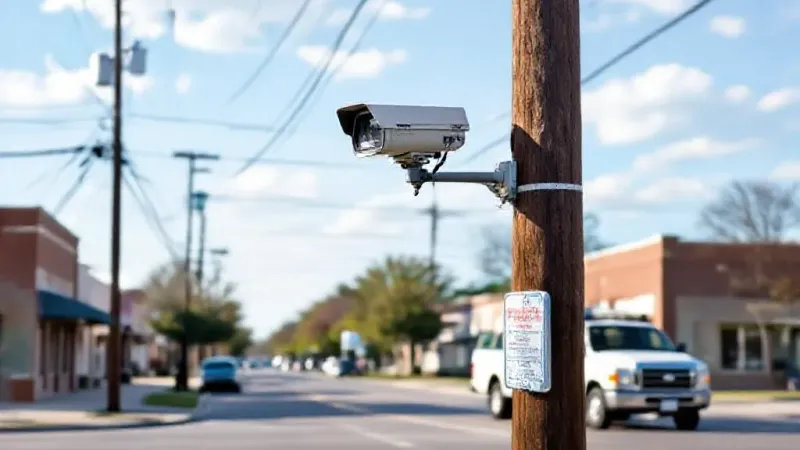
The utility offers these surveillance services as a convenient way for cities and counties to enhance public safety. Alabama Power leverages its existing infrastructure by installing equipment directly on its power poles, providing ideal camera placement and a consistent power source. The costs for these subscription-based services from companies like Flock are then included as a line item on the local government's power bill.
A company representative confirmed in 2025 that Alabama Power has partnered with more than 80 municipalities statewide to provide these surveillance services. Law enforcement agencies across Alabama have praised the technology, describing it as a meaningful tool for their operations. The Alabama Sheriffs Association stated in a July social media post that these emerging technologies assist daily in locating wanted individuals, finding AMBER Alert victims, and providing investigative leads.
However, this relationship between Alabama Power and surveillance companies has raised significant concerns among residents and surveillance scholars. Darrell Nance, a Birmingham resident and founder of DeFlock Birmingham, expressed alarm, noting the pervasive presence of cameras across the city. He has worked to obtain answers from elected officials regarding contracts but reported limited success.
Elizabeth Joh, a professor of law at the University of California, Davis, who studies policing and technology, indicated that Alabama Power customers might be concerned that sensitive location data, including the ability to track individuals across time and space, is being collected and shared without their full awareness. She highlighted that anyone with authorized or unauthorized access could search millions of time-stamped, location-specific records, including license plate numbers and vehicle details.
Alabama Power spokesperson Alyson Tucker stated that the company collaborates with customers, including municipalities, businesses, and community organizations, to offer technology services supported by its electric infrastructure. Tucker affirmed that Alabama Power installs and maintains the equipment but does not operate the system or access the collected data. She clarified that program participants own the data and are responsible for its access, management, use, and sharing.
Data reviewed from open records requests and public databases dating back to 2020 reveals that dozens of Alabama cities have adopted Flock or similar surveillance equipment. These records document more than 3 million instances of searches by customers with Flock access in the state. Officers or other users from over 180 local governments or police departments in Alabama have reportedly searched this data.
Despite law enforcement's positive view, research on ALPR efficacy has shown limited, if any, deterrent effect on crime. Concerns over the scope of Flock surveillance extend to state lawmakers. State Senator Arthur Orr, R-Decatur, expressed significant reservations about the technology's use. In 2021, Orr introduced legislation that would have established the state's first major limits on ALPR use, requiring secure data storage, publicized policies, and criminal penalties for data misuse. The bill passed the Alabama Senate unanimously but failed in the House, which Orr attributed to opposition from law enforcement. He plans to introduce an updated bill during the 2027 legislative session, citing concerns about law enforcement potentially using the technology for illicit snooping.
Conservative media outlets have also highlighted privacy implications, with some articles suggesting that such cameras could track individuals' movements, including those making legal purchases or visiting gun ranges, by recording their vehicles at various stops and frequent stops.