
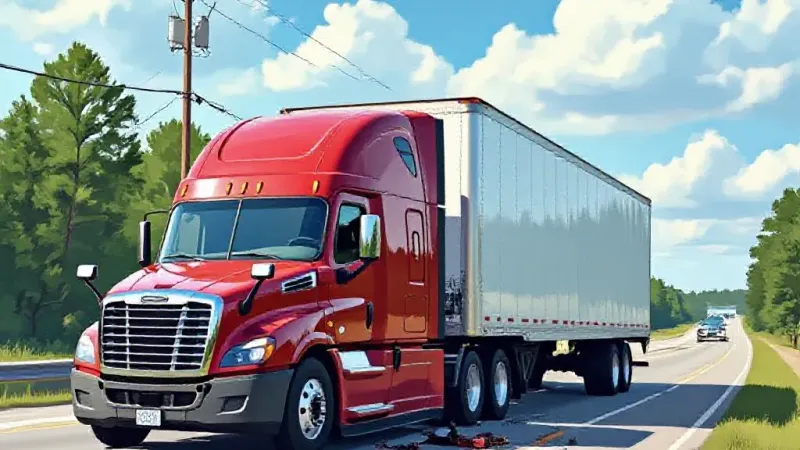
Commercial truck crash cases have become substantially more costly over the last ten years, especially when collisions result in death, permanent disability, or long-term medical needs. While there is no reliable national database tracking average truck crash settlements year by year, available government and transportation research highlights several key changes impacting these cases.
According to THE702FIRM Injury Attorneys, a Las Vegas personal injury law firm that reviewed federal crash statistics, insurance requirements, and public research, these changes include a rise in fatal large-truck crashes, growing medical and other losses, and a federal insurance minimum from 1985 that has lost much of its purchasing power. Exceptionally large jury awards, often referred to as “nuclear verdicts,” have also become a more visible element of trucking litigation.
Most civil cases conclude before trial, with settlement amounts and terms often remaining confidential, as reported by the Administrative Office of the U.S. Courts. The Federal Motor Carrier Safety Administration (FMCSA) also noted in its 2026 report to Congress that many trucking lawsuits are resolved under nondisclosure agreements, and insurers typically treat claims information as proprietary. This limitation prevents broad, reliable statements about the “average” settlement and makes it difficult for the FMCSA to assess the adequacy of existing trucking insurance requirements, despite efforts to obtain anonymized data.
Federal statistics underscore the increasing financial risks in severe truck cases. In 2013, the United States recorded approximately 327,000 police-reported crashes involving large trucks, with 3,541 fatal crashes and an estimated 69,000 injury crashes, according to FMCSA’s 2013 Large Truck and Bus Crash Facts. By 2022, the FMCSA counted approximately 503,000 police-reported large-truck crashes, including 5,279 fatal crashes and an estimated 114,000 injury crashes. This represents about a 49% increase in fatal crashes compared to 2013. Comparisons for nonfatal crashes require caution due to a change in the federal government’s national crash-sampling system beginning in 2016.
The consequences of these crashes disproportionately affect those outside the truck. In 2022, 82% of individuals killed in crashes involving large trucks were not occupants of the truck itself, based on the same FMCSA report. This often leads to claims involving multiple injured people or surviving family members, multiplying medical, income, funeral, and non-economic losses from a single incident.
For-hire interstate general freight carriers are typically required to carry at least $750,000 in bodily injury and property damage coverage. This federal minimum, established on January 1, 1985, remains in effect, according to FMCSA’s 2026 financial responsibility report to Congress. The FMCSA calculated that this $750,000 minimum would equate to approximately $2.2 million in 2024 dollars when adjusted for core inflation, or about $3.7 million when adjusted for medical inflation. Medical prices increased at an average annual rate of 4.21% between 1985 and 2024, significantly higher than the 2.8% for core consumer prices. A decade ago, in 2014, FMCSA reported that severe truck crash injuries could exceed $1 million and deemed existing minimums inadequate for some catastrophic losses. The agency considered updating the requirements but withdrew the rulemaking in 2017 due to insufficient data.
Although the federal minimum is a floor, some carriers opt for higher primary policies, excess insurance, or self-insurance arrangements. However, claims that exceed available policy limits can significantly influence negotiations, particularly when multiple individuals are injured or when future medical and lifetime support costs are projected to be extensive.
“Nuclear verdicts,” commonly used for jury awards over $10 million, have grown significantly. A study examining 600 truck-related cases between 2006 and 2019 identified 79 verdicts exceeding $1 million from 2005 through 2011, which increased to 265 such verdicts from 2012 through 2019—a 235% rise. This study also found that average verdict growth considerably outpaced both general inflation and medical cost growth during the period analyzed. These large verdicts also impact cases that never reach a jury, as settlement negotiations often consider expected trial outcomes, potential damages, and litigation costs.
Claim valuation extends beyond immediate hospital bills. Severe claims can encompass future surgeries, rehabilitation, medication, assistive equipment, home modifications, reduced earning capacity, long-term attendant care, and the overall impact of permanent injuries on daily life. The past decade has also brought increased scrutiny of evidence beyond the collision itself, including driver qualification files, hours-of-service records, vehicle inspections, maintenance histories, electronic logging data, dispatch communications, onboard cameras, and company safety policies. Recent transportation research has linked allegations of hiring and onboarding failures to higher awards.
However, a large verdict is not always the final amount paid. Trial judges can reduce awards, appellate courts can order new trials, state laws may restrict certain damages, and comparative-fault rules can decrease recovery if responsibility is divided. Ultimately, FMCSA's latest report concludes that while catastrophic crashes are relatively uncommon, the losses stemming from fatal and severe-injury crashes can greatly exceed the federal minimums. The agency continues to lack sufficient comprehensive settlement and claims data to determine how often this occurs nationwide.