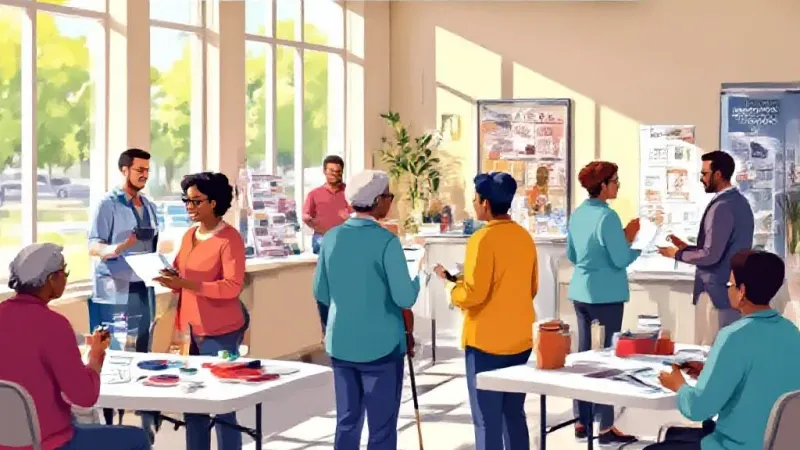
The city of Mobile, in partnership with the National Federation of the Blind, recently served as host for the second annual "Beyond Sight, Breaking Barriers Resource Fair." This significant community event, held on Tuesday, was specifically designed to foster connections and provide essential opportunities for blind and low-vision residents across Mobile. The fair's central aim was to link these neighbors with a diverse range of organizations and vendors that offer support, resources, and services tailored to their needs.
The fair's timing held particular significance, coinciding with Blind Awareness Month. This annual observance is dedicated to raising public understanding and promoting the inclusion of individuals who are blind or have low vision. Furthermore, the "Beyond Sight, Breaking Barriers Resource Fair" took place just before White Cane Safety Day, an occasion highlighted by organizers as crucial for public education. This proximity allowed for a focused emphasis on the white cane, recognizing its indispensable role in the daily lives of many in the visually impaired community.
Organizers at the fair strongly underscored the profound importance of the white cane. According to one organizer, White Cane Safety Day itself was established in 1964 by the sitting president of the time, specifically to bring greater awareness to this vital device. The organizer described the white cane not merely as an assistive device, but as a fundamental "mobility tool," and even "an extension of who we are." This description highlights the deep personal significance and utility the cane holds for its users. Its function is to facilitate navigation independently in everyday life, allowing individuals to move through their environments with confidence and autonomy. The clear intent expressed by the organizers was to ensure that other members of the community fully grasp and appreciate the critical importance and purpose of the white cane. This awareness is seen as key to fostering a more understanding and accessible environment for blind and low-vision individuals.
The gathering allowed blind and low-vision individuals to directly engage with entities offering specialized assistance. These "opportunities to connect" aimed to break down potential barriers by bringing resources directly to the community members who need them most. While the specific organizations and vendors present were not detailed, the fair's format ensured that attendees could explore various forms of support, from information on advocacy and adaptive technologies to services promoting education and employment. Such direct engagement helps residents discover new tools, learn about available programs, and build networks with peers and service providers.
Beyond connecting attendees with immediate services, the fair also served as an informational hub. Among the resources made available was comprehensive information about the National Federation of the Blind, the co-host of the event. The Federation is a prominent national organization that champions the rights and independence of blind people, working to transform societal attitudes and provide essential resources for its members. Their involvement in co-hosting the fair reinforces their commitment to fostering an inclusive community where blind and low-vision individuals can lead full and independent lives.
The continuation of this fair for a second year signals an ongoing dedication from the city of Mobile and its collaborative partners to support its visually impaired residents. Events like the "Beyond Sight, Breaking Barriers Resource Fair" play a vital role in enhancing community awareness, providing tangible resources, and empowering individuals to navigate their world with greater independence and confidence. The emphasis on the white cane further reinforces the message that recognizing and respecting these mobility tools is fundamental to creating a truly inclusive society.