
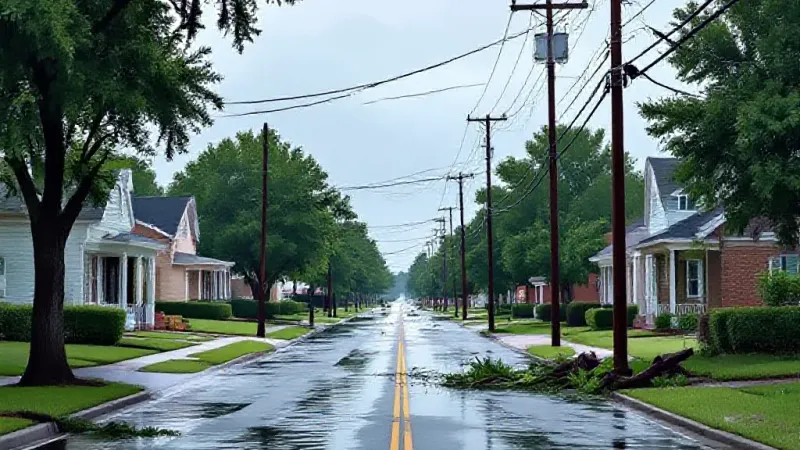
Hurricane Isaias, the first hurricane of the Atlantic season, made landfall near Destin, Florida, on Friday as a dangerous Category 2 storm. The Miami-based National Hurricane Centre reported maximum sustained winds of 105 mph (169 kph) as it struck the US Gulf Coast. The storm brought damaging winds, heavy rain, flooding, and life-threatening storm surges to communities across Alabama and the Florida Panhandle.
By early Saturday, more than 726,000 customers in Florida and Alabama were without power, according to poweroutage.com. Isaias, which had weakened to just below major hurricane status before coming ashore, was no longer considered a hurricane by Saturday morning as its wind speeds continued to decrease, becoming a post-tropical cyclone.
Florida Governor Ron DeSantis urged residents at a news conference to "Buckle down at this point. Don’t be getting out on the roads," highlighting flash flooding as a hazard expected "throughout the region."
Hurricane-force winds impacted the Gulf shoreline in low-lying coastal areas. Forecasters warned that conditions could also stir up tornadoes across the Florida Panhandle and into southern Georgia. Roads in Destin experienced flooding, and Pensacola police cautioned residents to avoid streets due to debris. Social media posts from residents showed downed trees and power lines, with one video depicting a roof being torn off an inn in Pensacola. Due to dangerous conditions, some Panhandle counties temporarily suspended emergency response on Friday night.
Across the state line, parts of southern Alabama were also flooded. Officials in Mobile reported downed trees and power lines. Closer to home, roads in Houston County, in the southeastern corner of Alabama, were closed because of similar conditions.
A significant concern remained the storm surge, which the hurricane center predicted could reach three to five feet (0.91 to 1.52 meters) from Dauphin Island, Alabama, to Florida’s Aucilla River. The National Hurricane Centre warned of dangerous conditions continuing throughout the western Panhandle, southern Alabama, and southern Mississippi. In response, several counties announced mandatory evacuations, and Mobile, Alabama, imposed a curfew extending through Saturday morning.
The severity of the warnings was underscored by the closure of dozens of Waffle Houses in the Florida Panhandle, as noted on the company’s website. The Southern breakfast chain is known for often remaining open during severe weather, making its closures a recognized indicator of storm intensity.
Most Friday flights at several airports, including all flights into and out of Destin-Fort Walton Beach Airport, were grounded. The hurricane center anticipated Isaias would weaken further and be downgraded to a tropical storm by Saturday afternoon. Late Friday night, US President Donald Trump told reporters at the White House that the hurricane was "under control" as he returned from a rally in New York.
Separately, Tropical Storm Rachel was expected to bring heavy winds and rain to northern Mexico and Southern California over the weekend. Meanwhile, Simon strengthened into a powerful Category 4 hurricane, barreling towards Mexico’s coast early on Saturday. The National Hurricane Centre stated Simon's maximum sustained winds increased to 140 mph (22 kmh), qualifying it as a major hurricane. Forecasters warned Simon was expected to bring heavy rainfall over parts of southwestern Mexico, potentially concentrated along the coast of Jalisco and in parts of Michoacan, Colima, and Nayarit, with life-threatening flooding and mudslides possible.